


IML/IMR/IIME — Understanding the In-Mold Decoration Family Tree
When people talk about in-mold decoration, IML and IMR are often the first terms that come to mind. However, this family is much larger than you might think. Understanding the differences between these processes is the first step toward making the right choice for your project.
For a quick overview, here is a comparison table:
| Process | Core Principle | One-Sentence Impression | Typical Applications |
|---|---|---|---|
| IML (In-Mold Labeling) | A pre-printed film is formed, trimmed, and placed into the mold before injection. The ink is sandwiched between the film and the plastic. | "A protective shield" The outermost layer is a durable film, with graphics protected beneath, offering excellent scratch and abrasion resistance with a premium feel. | Home appliance panels, consumer electronics, smart wearables |
| IMR (In-Mold Roller / Transfer) | A continuous roll of film feeds into the mold. After injection, the ink layer transfers from the film onto the plastic part, while the carrier film is rolled away. | "A stamp" High-speed production ideal for large volumes, but the graphics sit on the surface and are less durable than IML. | Mobile phone housings, 3C products, applications requiring frequent pattern changes |
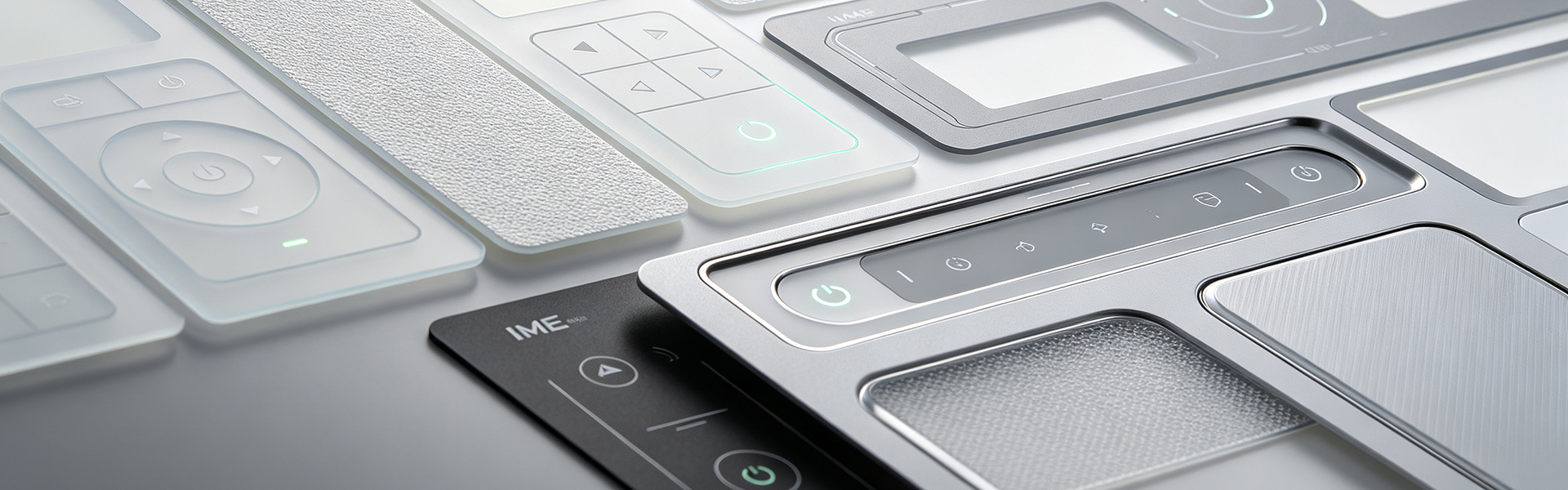
| IME (In-Mold Electronics) | Printed electronic circuits (e.g., touch sensors, lighting traces) are integrated into the decorative film, then molded into a single part. | "A surface that comes alive" The decorative part is not just good-looking — it can also enable smart interactions like touch control and dynamic lighting. | Automotive smart surfaces, appliance touch panels |
How to Choose?
This is a classic question of value trade-offs:
If your product demands high quality, superior durability, and complex 3D shapes (such as home appliances), IML is the preferred choice.
If your product is a high-volume consumer electronic with short cycles and frequent design updates, IMR offers greater efficiency and cost advantages.
And when you want your product surface to combine decoration with intelligent functionality, IME — representing the future — is the clear winner.
Summary
Understanding the differences between IML, IMR, and IME is like knowing which screwdriver to use for which screw. Choosing the right tool makes all the difference in getting the job done efficiently and effectively.


Leave your message